
Europe’s Entry Exit System - EES
April 17, 2026 | By: Table & Travel
On April 10, 2026, travelers crossing into Europe encountered something new at passport control. Instead of a quick stamp in the passport and a wave through, they were photographed. Fingerprinted. Logged into a central EU database.
Welcome to the era of the Europe Entry/Exit System.
Here is a full breakdown of what the system is, who it applies to, what actually happens at the border, and what you should do before your next European adventure.
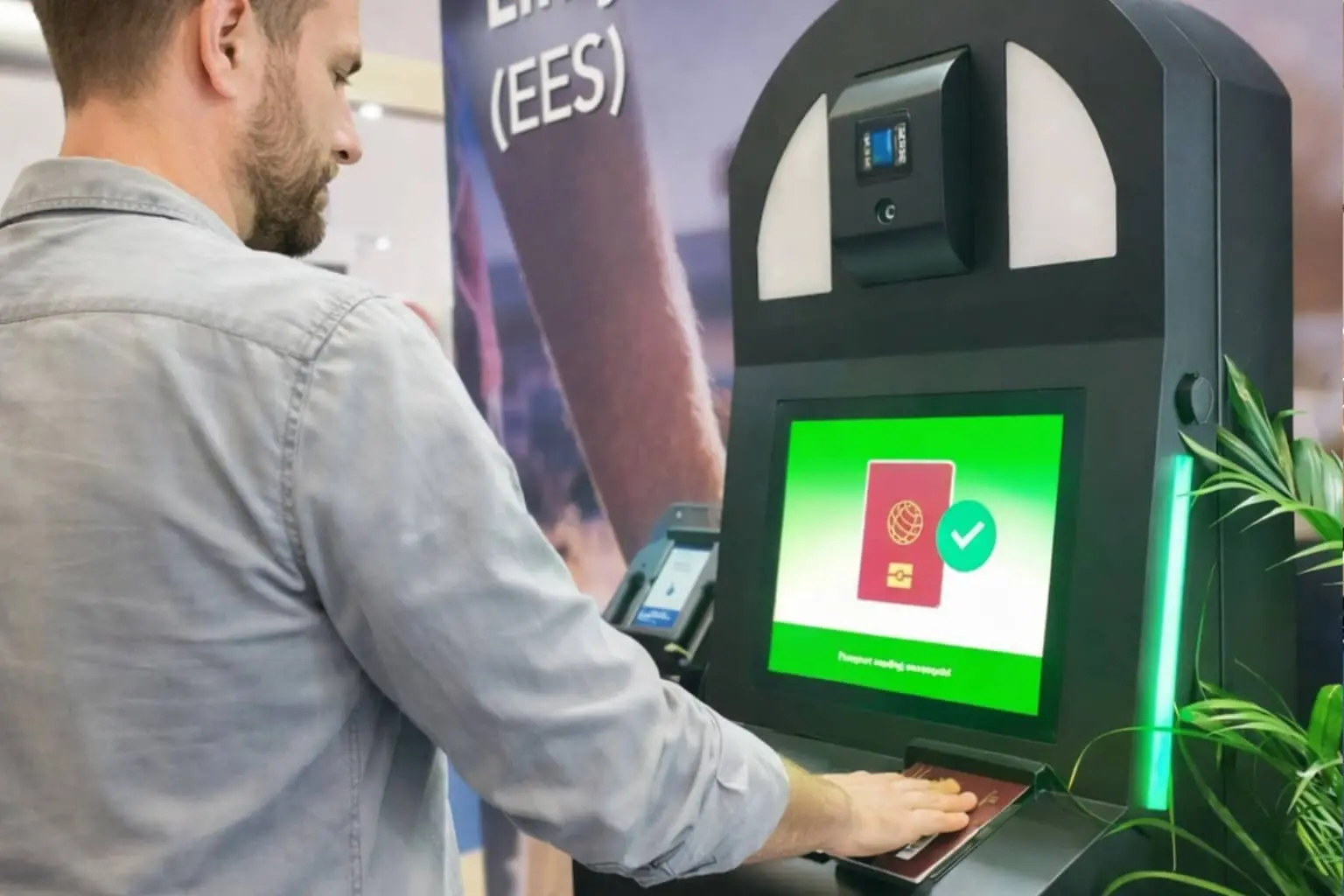
What Is the Europe Entry/Exit System?
The Entry/Exit System (widely referred to as EES) is a new digital border management program introduced by the European Union. It replaces the traditional passport stamp with a fully electronic record of every non-EU traveler crossing the external border of the Schengen Area.
The system registers the traveler's name, travel document data, biometric data (fingerprints and captured facial images), and the date and place of entry and exit each time they cross the external borders of the 29 European countries using the system
The stated goals are to modernize border management, reduce fraud, better track overstays, and improve security across the bloc. Long term, the EU says it will make travel more efficient.
Who Has to Do It?
This is the question most travelers are asking, so let's be direct.
EES applies to those traveling for a short stay from what the EU calls a "third country." This means people who are not EU citizens or citizens of the Schengen area. So if you are traveling to Europe from the United States, Canada, the United Kingdom, Australia, or most other non-EU countries, this applies to you.
A few specific exemptions worth knowing: Irish passport holders are exempt from EES. If you are a British passport holder but have EU residency, you are also exempt. Diplomats and accredited officials are also generally not subject to registration.
And if you are cruising? Passengers traveling on a cruise will not need to do EES entry or exit checks for EU day trips that are part of their itinerary. If you are flying to a European country to join a cruise, you will complete the EES entry process at the airport where you first arrive in the Schengen Area.
What Counts as a "Short Stay"?
Under the EES, a short stay is defined as a maximum of 90 days within any rolling 180-day period. This rule applies across all Schengen states, meaning the days you spend in France, Spain, or any other participating country are counted together, not separately.
Previously, tracking this was largely on the honor system, with manual passport stamps that were easy to lose or miscount. The EES changes that entirely. The system will automatically calculate how many days you have remaining, and border officials will have instant visibility.
For the vast majority of leisure travelers, this changes nothing about how long you can stay. But it does mean there is now a digital record of every trip you take to Europe.
Which Countries Are Included?
The EES covers 29 European countries, including all Schengen member states and associated nations. That covers the places most travelers are heading: France, Italy, Spain, Germany, Portugal, Greece, the Netherlands, and many more.
The United Kingdom is not part of the Schengen Area, so EES does not apply to border crossings at UK airports or ports. However, if you are flying into London and then traveling onward to Paris or Amsterdam, you will go through EES at your first Schengen entry point.
What Actually Happens at the Border?
Here is the part that matters most for practical travel planning.
Upon your first entry under EES, biometric data will be collected and stored under an individual digital file. While some countries may provide self-service kiosks or mobile apps as part of the process, registration by a passport control officer will be mandatory during that initial entry.
That first registration is the longest part. You will have your photo taken and your fingerprints scanned. You will also likely be asked about your accommodation, your return travel plans, and the purpose of your visit. Have the name and address of where you are staying ready before you reach the booth.
Once you are registered in the system, future trips move faster. You won't need to do the full check each time, as long as you travel within three years of first registering and your passport is the same (hasn't been renewed).
The catch: even on return visits, you still have to join the EES queue to verify your biometrics. The process is shorter, but the line may not be.
What About Kids?
This is one of the most common questions parents have, and the answer is straightforward.
People of all ages will need to go through the EES checks. However, children under 12 will not need to provide fingerprints, though they will need to have a facial scan taken.
There is one significant change for families and school groups traveling together. Under EES, each child will need an individual travel document, meaning the "one person, one document" rule now applies at most airports and ports. Previously, school groups could travel using a Collective Passport.
So if you are traveling with kids, make sure every single child has their own valid, up-to-date passport before you get to the airport.
Is Pre-Registration an Option?
A mobile app called "Travel to Europe" is available to pre-register personal data before arrival. Right now it only works for travelers entering Portugal and Sweden, with more countries expected to be added over time.
What You Should Do Before Your Europe Trip
A few concrete steps that will make your experience significantly less stressful:
- Arrive early. Give yourself at minimum two extra hours at the airport for your first EES registration. Three hours if you are connecting through a major hub like Paris or Barcelona.
- Have your accommodation details ready. Know your hotel name and address before you reach the border officer.
- Check every passport in your group. Every traveler, including children of all ages, needs their own individual, valid passport.
- Avoid tight layovers on arrival day. If your trip starts with a connection to another city, build in buffer time on the day you first enter the Schengen Area.
What About ETIAS? Is That the Same Thing?
Not the same thing, but they are related. ETIAS (the European Travel Information and Authorization System) is an additional pre-travel authorization system, similar to the US ESTA, that visa-exempt travelers will eventually need to apply for before visiting Europe. It is expected to launch later in 2026.
Once ETIAS launches, travelers will need both. You will apply for ETIAS online before your trip, then go through EES registration at the Schengen border. They serve different purposes: ETIAS screens travelers before they board a plane, and EES records their actual movements at the border.
However, if London or the UK is part of your Europe trip you'll also need a UK ETA, which is an Electronic Travel Authorization. Learn more: UK ETA Explained
The Bottom Line
Europe is still absolutely worth it. The EES is an adjustment, not a reason to cancel your trip. Millions of travelers are crossing Schengen borders every week, and the vast majority are getting through, even with the added wait times.
The travelers getting tripped up are the ones who showed up at the airport not knowing any of this existed. You now have the full picture, and that puts you in a much better position.